

When someone experiences sudden cardiac arrest, immediate CPR can double or even triple their chances of survival. But in a high-stress emergency, it’s common for bystanders to make mistakes that reduce the effectiveness of CPR.
Understanding common CPR mistakes and how to avoid them can help you respond more confidently and provide the best possible care until emergency responders arrive.
At NoCo CPR, we teach students how to perform CPR correctly so they can act quickly and effectively in real-life emergencies.
Why Proper CPR Technique Matters
CPR works by manually pumping blood through the body when the heart has stopped beating effectively. High-quality chest compressions help deliver oxygen to the brain and vital organs until professional help arrives.
Even small mistakes can reduce blood flow and decrease the effectiveness of CPR, which is why proper training and practice are so important.

Common CPR Mistake #1: Not Calling 911 Immediately
One of the most common mistakes during an emergency is delaying the call for help.
CPR is critical, but professional medical care is essential for survival.
How to avoid this mistake:
- Call 911 immediately or ask someone nearby to call.
- If you are alone, call 911 on speaker and begin CPR.
- If an AED (Automated External Defibrillator) is available, have someone retrieve it right away.
Early activation of emergency services ensures advanced care arrives as quickly as possible.
Common CPR Mistake #2: Incorrect Hand Placement During CPR
Proper hand placement is essential for effective chest compressions.
Many people place their hands too high, too low, or off center on the chest.
How to avoid this mistake:
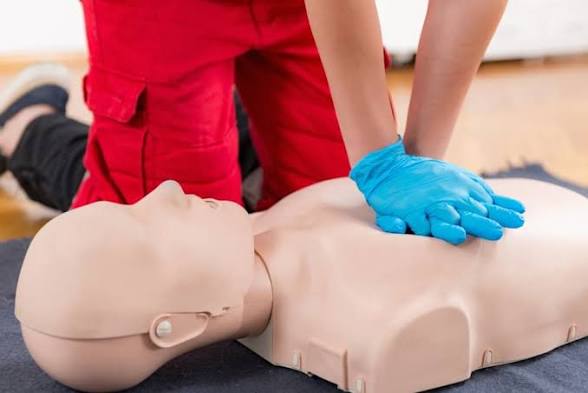
- Place the heel of your hand in the center of the chest
- Position it on the lower half of the breastbone (sternum)
- Place your other hand on top and interlock your fingers
Correct positioning helps generate the pressure needed to circulate blood.
Common CPR Mistake #3: Chest Compressions That Are Too Shallow
One of the biggest CPR mistakes is not pushing hard enough.
Shallow compressions do not move enough blood to support the brain and vital organs.
How to avoid this mistake:
- Compress the chest at least 2 inches deep for adults
- Use your body weight, not just your arms
- Allow the chest to fully recoil between compressions
High-quality compressions are the most important part of effective CPR.
Common CPR Mistake #4: Performing CPR Too Slowly
Chest compressions must be delivered at the correct rate to keep blood circulating.
Going too slowly can significantly reduce the effectiveness of CPR.
How to avoid this mistake:
- Perform compressions at a rate of 100–120 compressions per minute
- Think of the rhythm of songs like “Stayin’ Alive” by the Bee Gees
Maintaining the proper tempo helps keep blood flowing to vital organs.
Common CPR Mistake #5: Not Allowing Full Chest Recoil During CPR
Many rescuers unintentionally lean on the chest between compressions.
This prevents the chest from fully expanding and reduces blood flow.
How to avoid this mistake:
- Release pressure completely after each compression
- Allow the chest to return to its natural position
- Avoid leaning or resting on the chest
Full recoil allows the heart to refill with blood between compressions.
Common CPR Mistake #6: Interrupting CPR Compressions Too Often
Frequent pauses can drastically reduce the effectiveness of CPR.
Every interruption decreases blood flow to the brain.
How to avoid this mistake:
- Keep pauses as short as possible
- Resume compressions immediately after rescue breaths
- Continue compressions while the AED is being prepared if possible
Consistent compressions are key to maintaining circulation.
Common CPR Mistake #7: Hesitating to Start CPR
One of the most common barriers to helping someone in cardiac arrest is fear.
People may worry about doing CPR incorrectly or causing harm.
The truth is: doing something is far better than doing nothing.
How to avoid this mistake:
- Remember that cardiac arrest is already life-threatening
- Hands-Only CPR is recommended for untrained bystanders
- Push hard and fast in the center of the chest
Taking action can save a life.
CPR Training Helps Prevent Common CPR Mistakes
The best way to avoid common CPR mistakes is through hands-on CPR training with certified instructors.
Training allows you to:
- Practice correct compression depth and rate
- Learn proper hand placement
- Gain confidence using an AED
- Practice real-world emergency scenarios
At NoCo CPR in Fort Collins, our American Heart Association training courses provide the hands-on experience needed to build confidence and competence in life-saving skills.
Learn Proper CPR Skills with NoCo CPR
CPR is a skill that anyone can learn, and it can make the difference between life and death in an emergency.
By understanding common CPR mistakes and how to avoid them, you can be better prepared to act quickly and effectively when every second matters.
If you’re ready to gain the skills and confidence to respond in an emergency, consider taking a CPR course with NoCo CPR.
Your training could one day help save a life.
