How to Recognize Cardiac Arrest: Warning Signs You Should Never Ignore
Every second counts during a cardiac emergency. Sudden cardiac arrest can happen to anyone, anywhere, at any time—at home, at work, at the gym, or even during everyday activities. Knowing how to recognize the warning signs of cardiac arrest and acting quickly can make the difference between life and death.
At NoCo CPR, we believe that empowering our community with life-saving knowledge is just as important as teaching the hands-on skills. Understanding what cardiac arrest looks like is the first step in saving a life.
What Is Cardiac Arrest?
Cardiac arrest occurs when the heart suddenly stops beating effectively, preventing blood from circulating to the brain and other vital organs. When this happens, the person quickly loses consciousness and stops breathing normally.
Cardiac arrest is often confused with a heart attack, but they are not the same.
- Heart Attack: A blockage prevents blood flow to part of the heart muscle.
- Cardiac Arrest: The heart’s electrical system malfunctions, causing the heart to stop pumping blood.
A heart attack can sometimes lead to cardiac arrest, which is why recognizing warning signs early is critical.

Immediate Signs of Cardiac Arrest
When someone goes into cardiac arrest, the signs are usually sudden and dramatic. The person will typically:
- Collapse suddenly
- Lose consciousness
- Stop breathing or only gasp for air
- Have no pulse
Agonal gasps (irregular, gasping breaths) are common during cardiac arrest and are not normal breathing. If someone is gasping, they still need CPR immediately.
If you witness these signs, you should:
- Call 911 immediately
- Begin CPR
- Use an AED if one is available
Early CPR and AED use can double or even triple a person’s chance of survival.
Warning Signs That May Happen Before Cardiac Arrest
While cardiac arrest often occurs without warning, some people experience symptoms minutes, hours, or even days beforehand. These symptoms should never be ignored.
Possible warning signs include:
- Chest discomfort or chest pain
- Shortness of breath
- Sudden dizziness or lightheadedness
- Heart palpitations or irregular heartbeat
- Unexplained fatigue
- Nausea or vomiting
- Fainting or near fainting
These symptoms can indicate serious heart problems and should prompt immediate medical evaluation.
Who Is at Higher Risk?
Cardiac arrest can affect people of all ages, but certain risk factors increase the likelihood, including:
- Heart disease
- Previous heart attack
- Abnormal heart rhythms
- Family history of sudden cardiac arrest
- Smoking
- High blood pressure
- Diabetes
- Obesity
- Drug use
Even individuals without known heart problems can experience cardiac arrest, which is why CPR training for everyone is so important.
What to Do If Someone Collapses
If someone suddenly collapses and is unresponsive:
- Check for responsiveness
Tap their shoulders and shout to see if they respond. - Call 911 or ask someone nearby to call
Emergency services should be activated immediately. - Check breathing
If they are not breathing normally or only gasping, begin CPR. - Start chest compressions
Push hard and fast in the center of the chest at a rate of 100–120 compressions per minute. - Use an AED if available
AEDs are designed for the public and will guide you step-by-step.
Why CPR Training Matters
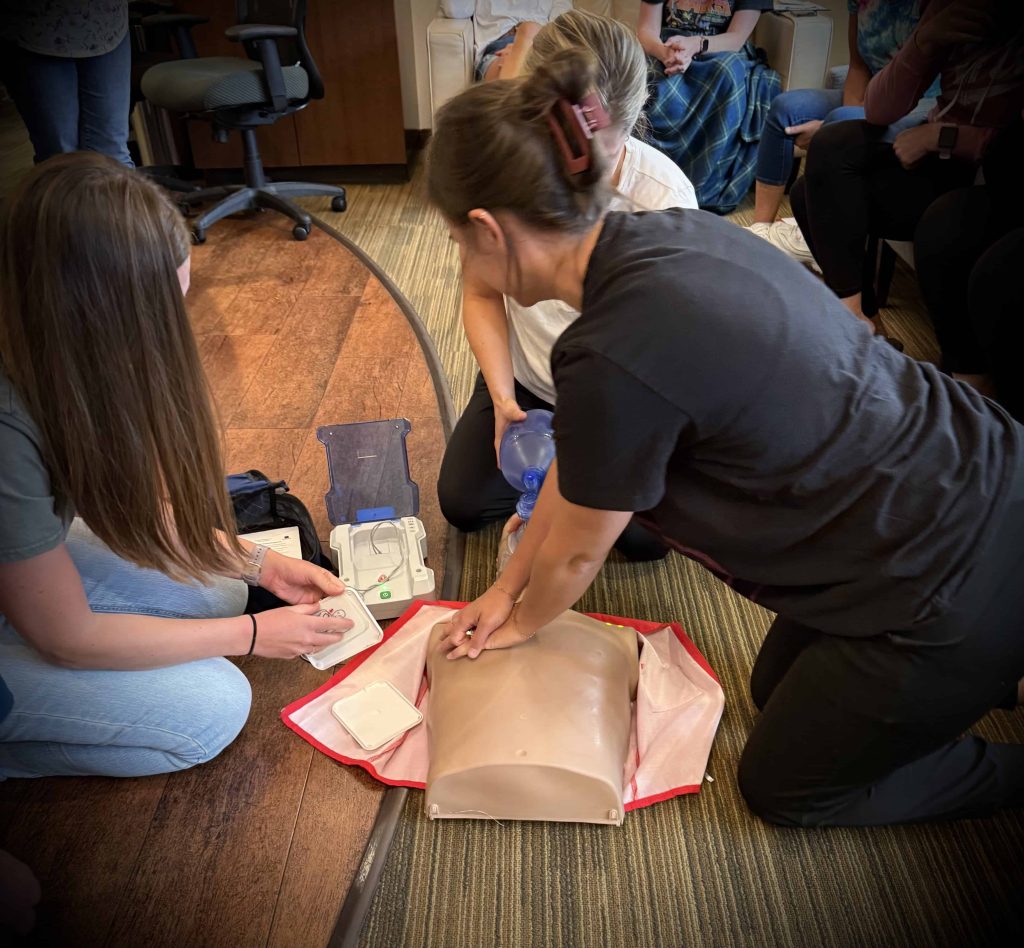
Bystander CPR can double or triple survival rates, yet many cardiac arrest victims do not receive immediate help. The reason is simple: many people are unsure what to do.
CPR training builds confidence, reduces hesitation, and prepares you to take action during a life-threatening emergency.
At NoCo CPR in Fort Collins, our courses teach participants how to:
- Recognize cardiac arrest quickly
- Perform high-quality CPR
- Use an AED safely and effectively
- Respond to adult, child, and infant emergencies
These skills empower everyday people to step in and save lives when it matters most.
Be Prepared to Save a Life
Cardiac arrest is sudden and unpredictable, but preparedness saves lives. Learning how to recognize the signs and respond immediately can turn an ordinary bystander into someone’s hero.
If you have never taken a CPR class—or it has been a few years since your last certification—consider taking a course. The skills you learn could one day help you save a friend, family member, coworker, or even a stranger.
At NoCo CPR, we are proud to provide CPR, AED, First Aid, BLS, ACLS, and PALS training to the Northern Colorado community. Our goal is to ensure that more people feel confident and ready to respond in an emergency.
Because when cardiac arrest happens, knowledge and action save lives.
