
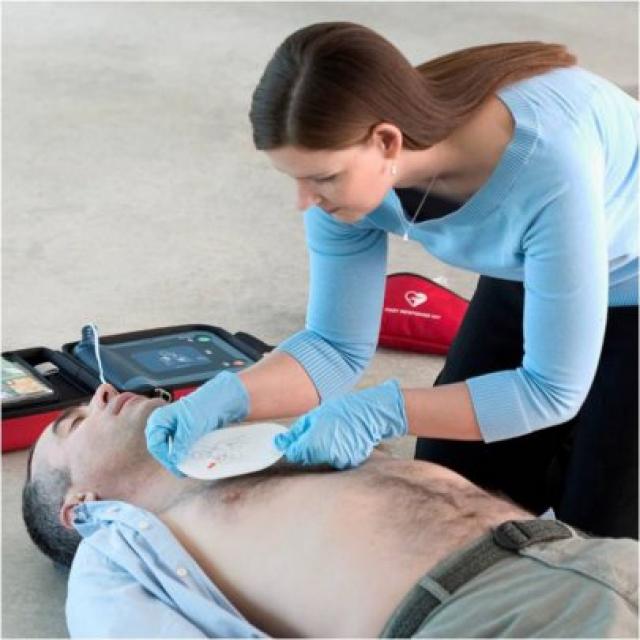
When a cardiac emergency happens, every second counts. The Chain of Survival steps outline the critical actions that give someone the best possible chance of surviving cardiac arrest and making a meaningful recovery.
According to the 2025 update from the American Heart Association, the Chain of Survival now includes six essential links, emphasizing not only immediate response but also long-term recovery. Each step plays a vital role and when one is delayed or missing, survival outcomes can decrease significantly.
What Is the Chain of Survival?
The Chain of Survival is a sequence of evidence-based actions that improve survival and recovery outcomes after cardiac arrest. The updated 2025 model reflects a unified approach for both adult and pediatric patients, whether the emergency occurs inside or outside of a hospital.
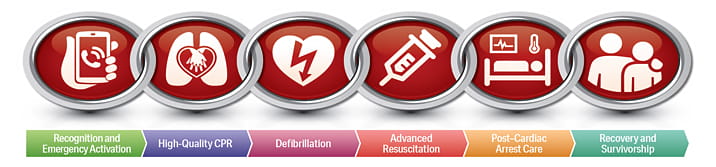
The six links in the Chain of Survival include:
- Recognition of cardiac arrest and activation of the emergency response system
- Early CPR with an emphasis on high-quality chest compressions
- Rapid defibrillation using an AED
- Advanced resuscitation by emergency medical services and healthcare providers
- Post-cardiac arrest care
- Recovery, including rehabilitation and ongoing support
Recognition and Activation of Emergency Response
The first and most critical step is recognizing when someone is in cardiac arrest. Signs include unresponsiveness and abnormal or absent breathing.
Once identified, call 911 immediately or direct someone nearby to do so. Early activation of emergency services ensures that advanced care is on the way without delay.
Early CPR: Keeping Blood Flowing
Starting CPR right away can double or even triple a person’s chance of survival.
High-quality CPR focuses on:
- Strong, fast chest compressions
- Minimal interruptions
- Allowing full chest recoil
Even if you are not formally trained, Hands-Only CPR can make a life-saving difference until help arrives.
Rapid Defibrillation with an AED
An Automated External Defibrillator (AED) analyzes the heart’s rhythm and, if needed, delivers a shock to restore a normal heartbeat.
AEDs are designed for public use and provide clear, step-by-step voice instructions. The sooner an AED is used, the greater the chance of survival.
You can often find AEDs in places like:
- Schools
- Gyms
- Offices
- Airports
Advanced Life Support
Once emergency medical services arrive, they provide advanced care such as airway management, medications, and continued monitoring.
This step builds on the earlier links and ensures the patient receives the highest level of care possible.
Post-Cardiac Arrest Care
Survival doesn’t end once a heartbeat is restored. Hospital care is essential to support recovery and reduce the risk of long-term complications.
This may include:
- Monitoring heart and brain function
- Managing oxygen levels and blood pressure
- Identifying and treating the underlying cause
Recovery: The Newest Link
One of the most important updates in the 2025 guidelines is the addition of recovery as the sixth link in the Chain of Survival.
Recovery goes beyond survival. It includes:
- Physical rehabilitation
- Cognitive and neurological support
- Emotional and psychological care
- Ongoing medical follow-up
This step recognizes that survival is not the end goal, quality of life after cardiac arrest matters just as much.

Why Every Link Matters
The Chain of Survival steps are only as strong as the weakest link. A delay in CPR or defibrillation can drastically reduce survival chances, while strong post-care and recovery support can improve long-term outcomes.
When more people are trained and confident in these steps, entire communities become safer and more prepared.
At NoCo CPR, we provide training aligned with the American Heart Association, helping individuals and teams build the skills needed to respond quickly and effectively.
Be the Link That Saves a Life
You don’t have to be a healthcare provider to make a difference. Knowing what to do and acting quickly can save someone’s life.
Whether you are a parent, teacher, coworker, or bystander, you can be a critical link in the Chain of Survival.
Ready to learn life-saving skills? Visit our website to register for an upcoming CPR or First Aid class in Northern Colorado.
