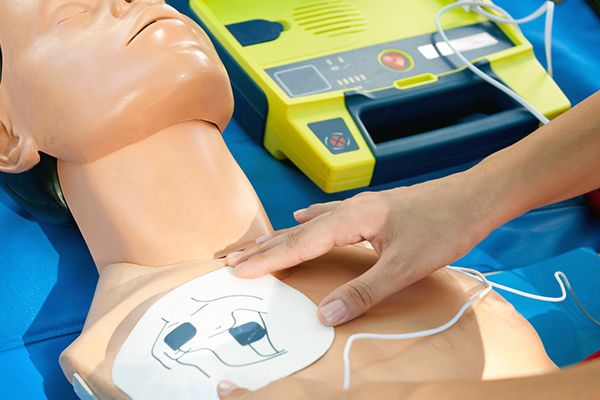
AEDs save lives, especially during sudden cardiac arrest when every second counts. An Automated External Defibrillator (AED) is a powerful, easy-to-use device designed to help restore a normal heart rhythm in an emergency—and it can be safely used by anyone.
When someone suddenly collapses and becomes unresponsive, every second matters. Sudden cardiac arrest (SCA) can happen to anyone—at any age, at any time, and often without warning. One of the most powerful tools available to save a life during cardiac arrest is an Automated External Defibrillator (AED).
Many people assume AEDs are only meant for medical professionals. The truth is: AEDs are designed for everyday people to use confidently and safely. Knowing how and when to use one can mean the difference between life and death. https://www.nococpr.com/
What Is an AED?
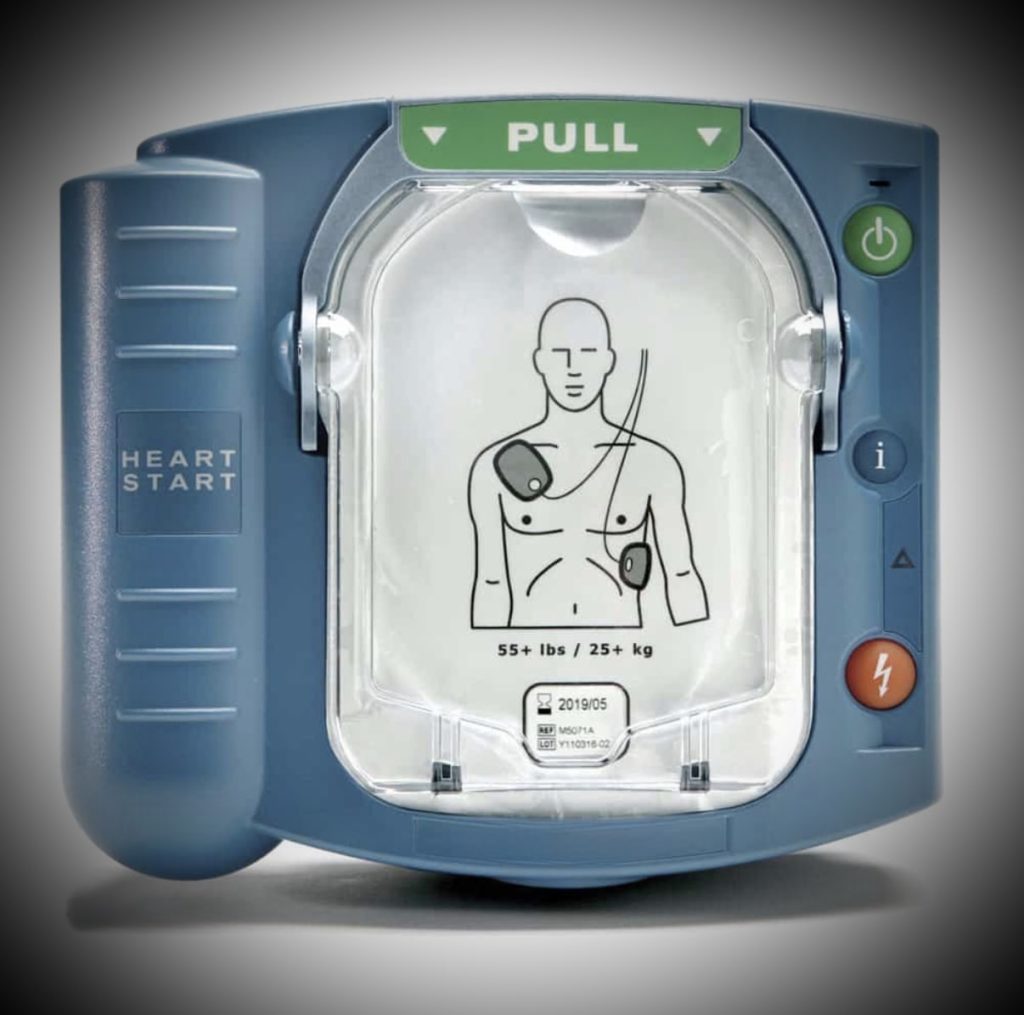
An AED (Automated External Defibrillator) is a portable device that analyzes the heart’s rhythm and, if needed, delivers an electric shock to help restore a normal heartbeat during cardiac arrest.
AEDs are commonly found in:
- Schools
- Gyms and fitness centers
- Airports
- Offices and workplaces
- Community centers
- Sporting venues
They are intentionally built to be simple, safe, and user-friendly, even for those with no medical background.
Why AEDs Are So Important
Sudden cardiac arrest is not the same as a heart attack. During cardiac arrest, the heart suddenly stops beating effectively, preventing blood flow to the brain and vital organs.
- Survival rates decrease by about 7–10% for every minute without defibrillation
- CPR helps, but CPR + AED use provides the best chance of survival
- When an AED is used within the first few minutes, survival rates can double or triple
Early CPR and early AED use save lives—and the sooner action is taken, the better the outcome.
Can a Layperson Really Use an AED?
Yes—100% yes. AEDs are specifically designed so that anyone can use them, even with little or no prior experience.
AEDs:
- Provide clear voice instructions
- Automatically analyze the heart rhythm
- Will NOT deliver a shock unless one is needed
- Walk you through each step calmly and clearly
You do not need to diagnose anything. The AED does that for you.
How to Use an AED: Simple Steps Anyone Can Follow
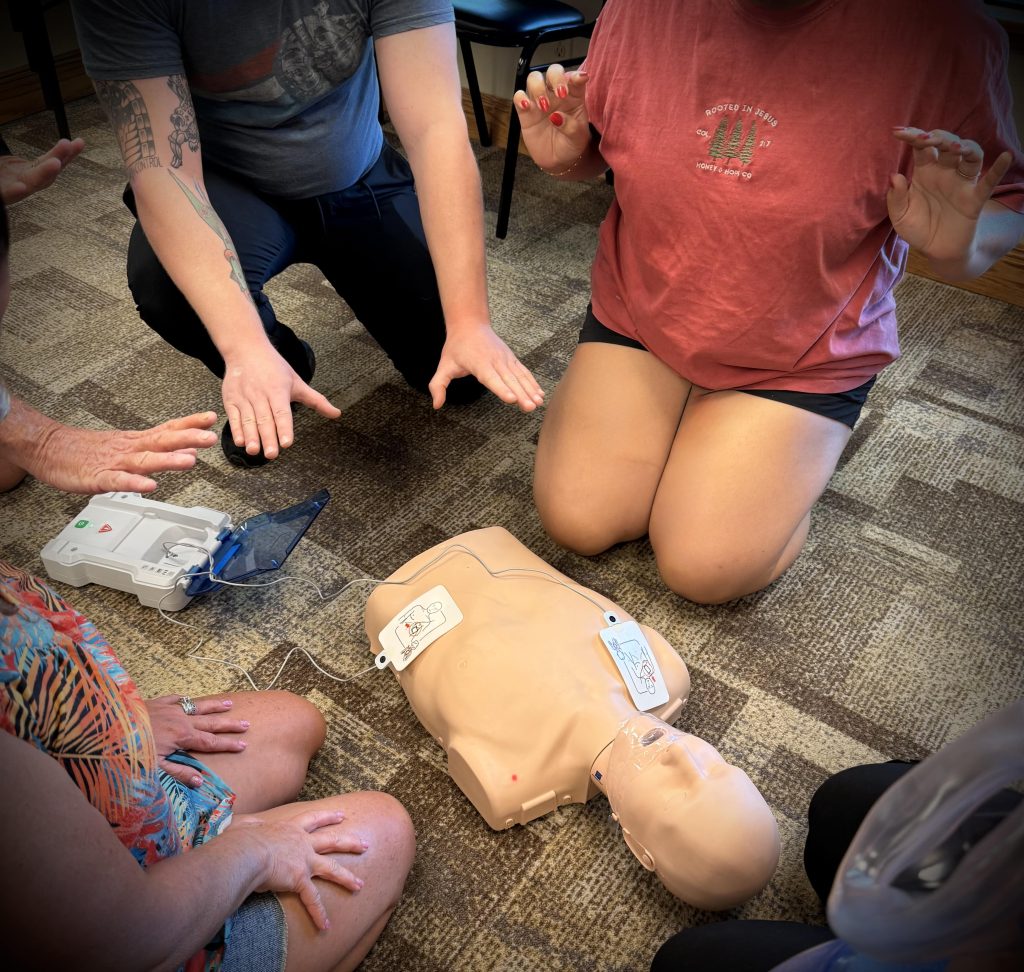
If someone collapses and is unresponsive:
- Call 911 (or have someone else call)
- Start CPR immediately
- Turn on the AED as soon as it arrives
- Follow the voice prompts
- Attach the pads to the bare chest as shown on the pictures
- Stand clear while the AED analyzes the heart rhythm
- Deliver a shock if instructed, then resume CPR
The AED will continue to guide you until help arrives.
Common Fears About Using an AED (and Why You Shouldn’t Worry)
“What if I do something wrong?”
You won’t. AEDs are designed to prevent mistakes and guide you step by step.
“What if I shock someone who doesn’t need it?”
AEDs will not shock unless it detects a shockable rhythm.
“Am I allowed to use one?”
Yes. Good Samaritan laws protect people who act in good faith to help during an emergency.
“What if I’ve never been trained?”
Training helps build confidence, but AEDs are made for untrained rescuers too.
AEDs + CPR: A Life-Saving Team
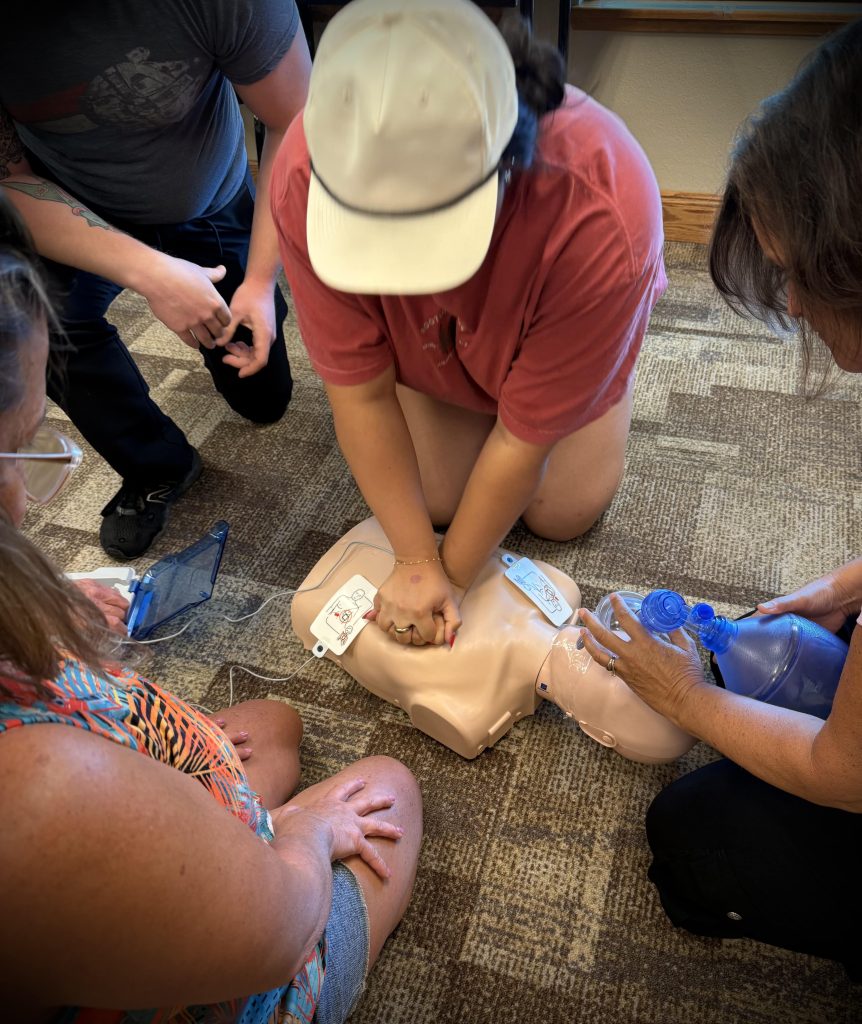
Using an AED works best when combined with high-quality CPR. CPR helps circulate oxygenated blood, while the AED corrects the heart rhythm. Together, they dramatically increase survival chances.
That’s why CPR/AED training is so important—it empowers everyday people to take action instead of waiting helplessly.
Learn CPR & AED Skills with NoCo CPR
At NoCo CPR, we believe everyone can be a lifesaver. Our CPR/AED classes are designed for:
- Healthcare professionals
- Workplace teams
- Parents and caregivers
- Coaches, teachers, and community members
- Anyone who wants to be prepared
We focus on hands-on practice, real-life scenarios, and building confidence so you’re ready if an emergency happens.
You don’t need to be a medical professional to save a life—you just need the knowledge and the courage to act.
Learn more or sign up for a CPR/AED class at:
